
- LEMTRADA Experiences
MY LEMTRADA INFUSION-DAY EXPERIENCES
By this point you probably know LEMTRADA is given as an infusion intravenously. But what’s it like? Does it hurt? How long does it take? How do you get ready for it?
LEMTRADA EXPERIENCES: Find Out What To Expect When You Start LEMTRADA Treatment For Relapsing MS
MY LEMTRADA INFUSION-DAY EXPERIENCES
By Chad, Husband, Father, Software Engineer
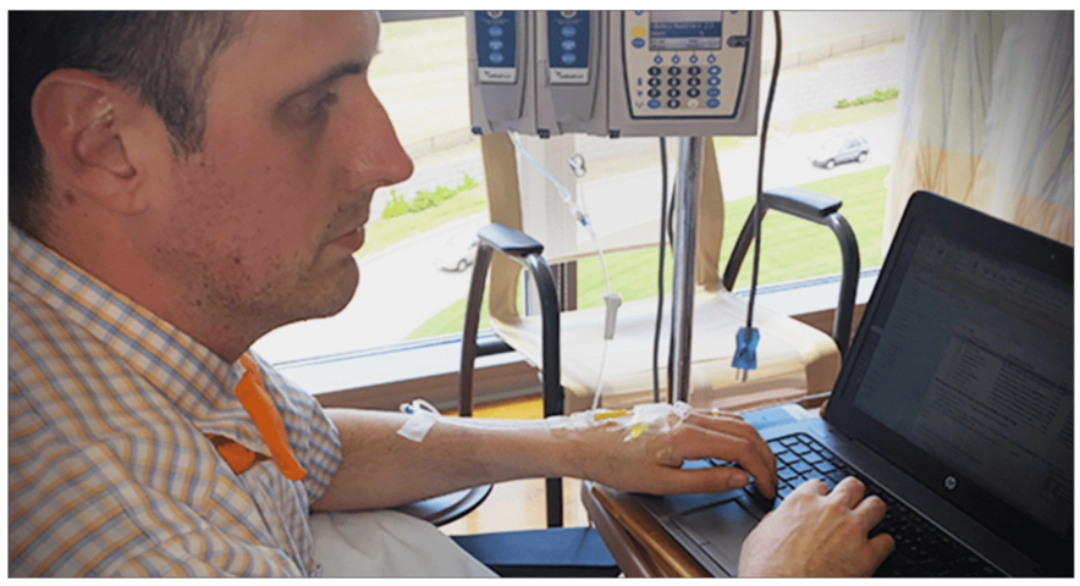
By this point you probably know LEMTRADA is given as an infusion intravenously. But what’s it like? Does it hurt? How long does it take? How do you get ready for it? Since I have personal experience with LEMTRADA infusions, I’ll fill you in on one of my typical treatment days, so you have an idea of what to expect.
Normally, I’m up at 4:00 am, so an 8:00 am appointment time seemed rather late, but it’s not the infusion nurses’ fault, so I didn’t complain to them. Once I was checked in and in my seat at the infusion center, the medicine bags were hung on my IV pole with care while visions of sugar plums…oops, wrong story :)
Everyone is different and people may receive different premedications before receiving LEMTRADA—so I won’t go into a detailed list of names here. I’ll just say I was given pills to counteract possible side effects, an IV with steroids and an antihistamine too. And I was told about how important it is to stay hydrated throughout the day. That’s where plenty of flavors of my favorite seltzer water came into play.
Whether you drink seltzer like me or prefer to drink water or other liquids to stay hydrated, see if you are able to get a chair, room, or bed close to a bathroom because you will have lots of fluids coursing through your veins that need to go somewhere…
After you receive your infusion and the drip bags of meds are empty, it’s time to wait—for 2 hours or more—so the nurses can make sure you’re okay and that you don’t have any infusion-related side effects. For me personally, by the fifth day, I was tired and slept almost the entire time. Also, as I was preparing to leave, I started to get a rash on my face and my chest began to tighten. After a dose of antihistamines, I was cleared to go home a couple of hours later, but generally after the observation, if all is deemed well by your specially trained nurse, it’s time to leave. On all days except for the fifth I felt well enough to drive myself home, but because my neurologist and infusion nurse said it was a bad idea to drive, I made sure someone else was able to drive me home.
So now you have an example of a typical day at the infusion center for your LEMTRADA treatment. Here are a few other things to consider since you’ll be there almost the entire day:
- Bring some entertainment like books, magazines, electronic devices, and headphones (if the infusion center allows them). And if you do bring electronic devices don’t forget charging cables or extra batteries.
- Some infusion centers will provide you some sort of food, but you can’t count on it so bring something to eat (along with your yummy seltzer or water of course). You can also plan ahead by calling the infusion center to see if they serve food, and if not, ask what food you can bring in.
- You might want to bring breath mints to counteract any odd tastes you may get from premedications.
Now, of course, everyone’s experience with LEMTRADA is different, but I always say, "you learn something new everyday"—and it’s no different when it comes to treatment. Throughout your infusion days, you’ll meet new people and learn new things. That’ll help you figure out what to bring, what activities to do, and what to wear. You might even learn something new about yourself!

SEE MORE ARTICLES

Being a Care Partner
Jason doesn’t have relapsing MS, but he lives experiences it every day through his wife, Kimberly. Here is what being a Care Partner means to him…

A Supportive Employer Can Help With Relapsing MS
One of the challenges for people with relapsing MS is talking to an employer about their condition. Here’s how I handled it.
Important Safety Information
LEMTRADA is a prescription medicine used to treat relapsing forms of multiple sclerosis (MS), to include relapsing-remitting disease and active secondary progressive disease, in adults. Since treatment with LEMTRADA can increase your risk of getting certain conditions and diseases, LEMTRADA is generally prescribed for people who have tried 2 or more MS medicines that have not worked well enough. LEMTRADA is not recommended for use in patients with clinically isolated syndrome (CIS). It is not known if LEMTRADA is safe and effective for use in children under 17 years of age.
LEMTRADA can cause serious side effects including:
Serious autoimmune problems: Some people receiving LEMTRADA develop a condition where the immune cells in your body attack other cells or organs in the body (autoimmunity), which can be serious and may cause death. Serious autoimmune problems may include:
- Immune thrombocytopenic purpura (ITP), a condition of reduced platelet counts in your blood that can cause severe bleeding that may cause life‑threatening problems. Call your healthcare provider (HCP) right away if you have any of the following symptoms: easy bruising, bleeding from a cut that is hard to stop, coughing up blood, heavier menstrual periods than normal, bleeding from your gums or nose that is new or takes longer than usual to stop, small, scattered spots on your skin that are red, pink, or purple.
- Kidney problems called anti‑glomerular basement membrane disease, which, if not treated, can lead to severe kidney damage, kidney failure that needs dialysis, a kidney transplant, or death. Call your HCP right away if you have any of the following symptoms: swelling of your legs or feet, blood in the urine (red or tea‑colored urine), decrease in urine, fatigue, coughing up blood.
It is important for you to have blood and urine tests before you receive, while you are receiving and every month for 4 years or longer, after you receive your last LEMTRADA infusion.
Serious infusion reactions: LEMTRADA can cause serious infusion reactions that may cause death. Serious infusion reactions may happen while you receive, or up to 24 hours or longer after you receive LEMTRADA.
- You will receive your infusion at a healthcare facility with equipment and staff trained to manage infusion reactions, including serious allergic reactions, and urgent heart or breathing problems. You will be watched while you receive, and for 2 hours or longer after you receive, LEMTRADA. If a serious infusion reaction happens while you are receiving LEMTRADA, your infusion may be stopped.
Tell your HCP right away if you have any of the following symptoms of a serious infusion reaction during the infusion, and after you have left the healthcare facility:
|
|
To lower your chances of getting a serious infusion reaction, your HCP will give you a medicine called corticosteroids before your first 3 infusions of a treatment course. You may also be given other medicines before or after the infusion to try to reduce your chances of having these reactions or to treat them if they happen.
Stroke and tears in your arteries that supply blood to your brain (carotid and vertebral arteries): Some people have had serious and sometimes deadly strokes and tears in their carotid or vertebral arteries within 3 days of receiving LEMTRADA. Get help right away if you have any of the following symptoms that may be signs of a stroke or tears in your carotid or vertebral arteries: drooping of parts of your face, weakness on one side, sudden severe headache, difficulty with speech, neck pain.
Certain cancers: Receiving LEMTRADA may increase your chance of getting some kinds of cancers, including thyroid cancer, skin cancer (melanoma), and blood cancers called lymphoproliferative disorders and lymphoma. Call your HCP if you have the following symptoms that may be a sign of thyroid cancer: new lump, swelling in your neck, pain in front of neck, trouble swallowing or breathing, hoarseness or other voice changes that do not go away, cough that is not caused by a cold.
Have your skin checked before you start receiving LEMTRADA and each year while you are receiving treatment to monitor for symptoms of skin cancer.
Because of risks of autoimmunity, infusion reactions, and some kinds of cancers, LEMTRADA is only available through a restricted program called the LEMTRADA Risk Evaluation and Mitigation Strategy (REMS) Program.
Do not receive LEMTRADA if you:
- are allergic to alemtuzumab or to any of the inactive ingredients in LEMTRADA
- are infected with human immunodeficiency virus (HIV)
- have an active infection
Thyroid problems: Some patients taking LEMTRADA may get an overactive thyroid (hyperthyroidism) or an underactive thyroid (hypothyroidism). Call your HCP if you have: excessive sweating, unexplained weight loss, unexplained weight gain, fast heartbeat, eye swelling, nervousness, feeling cold, worsening tiredness, constipation.
Low blood counts (cytopenias): LEMTRADA may cause a decrease in some types of blood cells. Some people with these low blood counts have increased infections. Call your doctor right away if you have symptoms of cytopenias such as: weakness, chest pain, yellowing of the skin or whites of the eyes (jaundice), dark urine, fast heartbeat.
Inflammation of the liver: Call your HCP right away if you have symptoms such as unexplained nausea, stomach pain, tiredness, loss of appetite, yellowing of skin or whites of eyes, or bleeding or bruising more easily than normal.
Hemophagocytic lymphohistiocytosis: LEMTRADA may increase the risk of overactivity of the immune system that can be fatal if not diagnosed and treated early. If you experience symptoms such as fever, swollen glands, or skin rash, contact your HCP right away.
Adult Onset Still's Disease (AOSD): LEMTRADA may cause AOSD, a rare condition that can cause a high fever lasting more than 1 week, pain, stiffness with or without swelling in multiple joints, and/or a skin rash. If you experience a combination of these symptoms, contact your HCP immediately.
Thrombotic thrombocytopenic purpura (TTP): LEMTRADA may cause blood clotting problems that can be fatal. Call your HCP right away if you experience symptoms such as: purplish spots on skin or in mouth due to bleeding under skin, yellowing of skin or whites of eyes (jaundice), feel tired or weak, very pale skin, fever, fast heart rate or short of breath, headache, speech changes, confusion, vision changes, seizure, low amount of urine or dark or bloody urine, stomach pain, nausea, vomiting, or diarrhea.
Autoimmune encephalitis (AIE): LEMTRADA may cause AIE, a brain disorder which may include symptoms that seem like an MS relapse. Call your HCP right away if you have any of the following symptoms: personality changes, mood changes, seeing things that are not there (hallucinations), agitation, short term memory loss, confusion, movement disorders, or seizures.
Bleeding disorder (acquired hemophilia A): LEMTRADA may cause acquired hemophilia A. Call your HCP right away if you have any of the following symptoms: bruising, nose bleeds, bleeding from a cut that may take longer than usual to stop, painful or swollen joints, blood in urine, dark or bloody stools.
Inflammation of the colon (colitis): Tell your HCP if you have symptoms of colitis, such as diarrhea (loose stools) or more frequent bowel movements, stools that are black, tarry or have blood or mucous, or severe stomach-area pain or tenderness.
Serious infections: LEMTRADA may cause you to have a serious infection while you receive and after receiving a course of treatment. Serious infections may include:
- listeria. People who receive LEMTRADA have an increased chance of getting a bacterial infection called listeria, which can lead to significant complications or death. Avoid foods that may be a source of listeria or make sure foods are heated well.
- herpes viral infections. Some people taking LEMTRADA have an increased chance of getting herpes viral infections. Take medicines as prescribed by your HCP to reduce your chances of getting these infections.
- tuberculosis. Your HCP should check you for tuberculosis before you receive LEMTRADA.
- hepatitis. People who are at high risk of, or are carriers of, hepatitis B (HBV) or hepatitis C (HCV) may be at risk of irreversible liver damage.
These are not all the possible infections that could happen while on LEMTRADA. Call your HCP right away if you have symptoms of a serious infection such as fever or swollen glands. Talk to your HCP before you get vaccinations after receiving LEMTRADA. Certain vaccinations may increase your chances of getting infections.
Progressive multifocal leukoencephalopathy (PML): A rare brain infection that usually leads to death or severe disability has been reported with LEMTRADA. Symptoms of PML get worse over days to weeks. It is important that you call your doctor right away if you have any new or worsening medical problems that have lasted several days, including problems with thinking, eyesight, strength, balance, weakness on one side of your body, using your arms or legs.
Inflammation of the gallbladder without gallstones (acalculous cholecystitis): LEMTRADA may increase your chance of getting inflammation of the gallbladder without gallstones, a serious medical condition that can be life-threatening. Call your HCP right away if you have stomach pain or discomfort, fever, nausea, or are vomiting.
Swelling of lung tissue (pneumonitis): Some people have had swelling of the lung tissue while receiving LEMTRADA. Call your HCP right away if you have shortness of breath, cough, wheezing, chest pain or tightness, or are coughing up blood.
Before receiving LEMTRADA, tell your HCP if you:
- have bleeding, thyroid, or kidney problems
- have a recent history of infection
- are taking a medicine called Campath® (alemtuzumab)
- have received a live vaccine in the past 6 weeks before receiving LEMTRADA or plan to receive any live vaccines. Ask your HCP if you are not sure if your vaccine is a live vaccine.
- are pregnant or plan to become pregnant. LEMTRADA may harm your unborn baby. You should use birth control while receiving LEMTRADA and for 4 months after your course of treatment.
- are breastfeeding or plan to breastfeed. You and your HCP should decide if you should receive LEMTRADA or breastfeed.
Tell your HCP about all the medicines you take, including prescription and over‑the‑counter medicines, vitamins, and herbal supplements. LEMTRADA and other medicines may affect each other, causing side effects. Especially tell your HCP if you take medicines that increase your chance of getting infections, including medicines used to treat cancer or to control your immune system.
The most common side effects of LEMTRADA include:
|
|
|
Tell your HCP if you have any side effect that bothers you or that does not go away. These are not all the possible side effects of LEMTRADA. You may report side effects to FDA at 1-800-FDA-1088.
Click here for full Prescribing Information including Serious Side Effects.
Click here for medication Guide including Serious Side Effects.
Important Safety Information
LEMTRADA is a prescription medicine used to treat relapsing forms of multiple sclerosis (MS), to include relapsing-remitting disease and active secondary progressive disease, in adults. Since treatment with LEMTRADA can increase your risk of getting certain conditions and diseases, LEMTRADA is generally prescribed for people who have tried 2 or more MS medicines that have not worked well enough. LEMTRADA is not recommended for use in patients with clinically isolated syndrome (CIS). It is not known if LEMTRADA is safe and effective for use in children under 17 years of age.
LEMTRADA can cause serious side effects including:
Serious autoimmune problems: Some people receiving LEMTRADA develop a condition where the immune cells in your body attack other cells or organs in the body (autoimmunity), which can be serious and may cause death. Serious autoimmune problems may include:
- Immune thrombocytopenic purpura (ITP), a condition of reduced platelet counts in your blood that can cause severe bleeding that may cause life‑threatening problems. Call your healthcare provider (HCP) right away if you have any of the following symptoms: easy bruising, bleeding from a cut that is hard to stop, coughing up blood, heavier menstrual periods than normal, bleeding from your gums or nose that is new or takes longer than usual to stop, small, scattered spots on your skin that are red, pink, or purple.
- Kidney problems called anti‑glomerular basement membrane disease, which, if not treated, can lead to severe kidney damage, kidney failure that needs dialysis, a kidney transplant, or death. Call your HCP right away if you have any of the following symptoms: swelling of your legs or feet, blood in the urine (red or tea‑colored urine), decrease in urine, fatigue, coughing up blood.
It is important for you to have blood and urine tests before you receive, while you are receiving and every month for 4 years or longer, after you receive your last LEMTRADA infusion.
Serious infusion reactions: LEMTRADA can cause serious infusion reactions that may cause death. Serious infusion reactions may happen while you receive, or up to 24 hours or longer after you receive LEMTRADA.
- You will receive your infusion at a healthcare facility with equipment and staff trained to manage infusion reactions, including serious allergic reactions, and urgent heart or breathing problems. You will be watched while you receive, and for 2 hours or longer after you receive, LEMTRADA. If a serious infusion reaction happens while you are receiving LEMTRADA, your infusion may be stopped.
Tell your HCP right away if you have any of the following symptoms of a serious infusion reaction during the infusion, and after you have left the healthcare facility:
|
|
To lower your chances of getting a serious infusion reaction, your HCP will give you a medicine called corticosteroids before your first 3 infusions of a treatment course. You may also be given other medicines before or after the infusion to try to reduce your chances of having these reactions or to treat them if they happen.
Stroke and tears in your arteries that supply blood to your brain (carotid and vertebral arteries): Some people have had serious and sometimes deadly strokes and tears in their carotid or vertebral arteries within 3 days of receiving LEMTRADA. Get help right away if you have any of the following symptoms that may be signs of a stroke or tears in your carotid or vertebral arteries: drooping of parts of your face, weakness on one side, sudden severe headache, difficulty with speech, neck pain.
Certain cancers: Receiving LEMTRADA may increase your chance of getting some kinds of cancers, including thyroid cancer, skin cancer (melanoma), and blood cancers called lymphoproliferative disorders and lymphoma. Call your HCP if you have the following symptoms that may be a sign of thyroid cancer: new lump, swelling in your neck, pain in front of neck, trouble swallowing or breathing, hoarseness or other voice changes that do not go away, cough that is not caused by a cold.
Have your skin checked before you start receiving LEMTRADA and each year while you are receiving treatment to monitor for symptoms of skin cancer.
Because of risks of autoimmunity, infusion reactions, and some kinds of cancers, LEMTRADA is only available through a restricted program called the LEMTRADA Risk Evaluation and Mitigation Strategy (REMS) Program.
Do not receive LEMTRADA if you:
- are allergic to alemtuzumab or to any of the inactive ingredients in LEMTRADA
- are infected with human immunodeficiency virus (HIV)
- have an active infection
Thyroid problems: Some patients taking LEMTRADA may get an overactive thyroid (hyperthyroidism) or an underactive thyroid (hypothyroidism). Call your HCP if you have: excessive sweating, unexplained weight loss, unexplained weight gain, fast heartbeat, eye swelling, nervousness, feeling cold, worsening tiredness, constipation.
Low blood counts (cytopenias): LEMTRADA may cause a decrease in some types of blood cells. Some people with these low blood counts have increased infections. Call your doctor right away if you have symptoms of cytopenias such as: weakness, chest pain, yellowing of the skin or whites of the eyes (jaundice), dark urine, fast heartbeat.
Inflammation of the liver: Call your HCP right away if you have symptoms such as unexplained nausea, stomach pain, tiredness, loss of appetite, yellowing of skin or whites of eyes, or bleeding or bruising more easily than normal.
Hemophagocytic lymphohistiocytosis: LEMTRADA may increase the risk of overactivity of the immune system that can be fatal if not diagnosed and treated early. If you experience symptoms such as fever, swollen glands, or skin rash, contact your HCP right away.
Adult Onset Still's Disease (AOSD): LEMTRADA may cause AOSD, a rare condition that can cause a high fever lasting more than 1 week, pain, stiffness with or without swelling in multiple joints, and/or a skin rash. If you experience a combination of these symptoms, contact your HCP immediately.
Thrombotic thrombocytopenic purpura (TTP): LEMTRADA may cause blood clotting problems that can be fatal. Call your HCP right away if you experience symptoms such as: purplish spots on skin or in mouth due to bleeding under skin, yellowing of skin or whites of eyes (jaundice), feel tired or weak, very pale skin, fever, fast heart rate or short of breath, headache, speech changes, confusion, vision changes, seizure, low amount of urine or dark or bloody urine, stomach pain, nausea, vomiting, or diarrhea.
Autoimmune encephalitis (AIE): LEMTRADA may cause AIE, a brain disorder which may include symptoms that seem like an MS relapse. Call your HCP right away if you have any of the following symptoms: personality changes, mood changes, seeing things that are not there (hallucinations), agitation, short term memory loss, confusion, movement disorders, or seizures.
Bleeding disorder (acquired hemophilia A): LEMTRADA may cause acquired hemophilia A. Call your HCP right away if you have any of the following symptoms: bruising, nose bleeds, bleeding from a cut that may take longer than usual to stop, painful or swollen joints, blood in urine, dark or bloody stools.
Inflammation of the colon (colitis): Tell your HCP if you have symptoms of colitis, such as diarrhea (loose stools) or more frequent bowel movements, stools that are black, tarry or have blood or mucous, or severe stomach-area pain or tenderness.
Serious infections: LEMTRADA may cause you to have a serious infection while you receive and after receiving a course of treatment. Serious infections may include:
- listeria. People who receive LEMTRADA have an increased chance of getting a bacterial infection called listeria, which can lead to significant complications or death. Avoid foods that may be a source of listeria or make sure foods are heated well.
- herpes viral infections. Some people taking LEMTRADA have an increased chance of getting herpes viral infections. Take medicines as prescribed by your HCP to reduce your chances of getting these infections.
- tuberculosis. Your HCP should check you for tuberculosis before you receive LEMTRADA.
- hepatitis. People who are at high risk of, or are carriers of, hepatitis B (HBV) or hepatitis C (HCV) may be at risk of irreversible liver damage.
These are not all the possible infections that could happen while on LEMTRADA. Call your HCP right away if you have symptoms of a serious infection such as fever or swollen glands. Talk to your HCP before you get vaccinations after receiving LEMTRADA. Certain vaccinations may increase your chances of getting infections.
Progressive multifocal leukoencephalopathy (PML): A rare brain infection that usually leads to death or severe disability has been reported with LEMTRADA. Symptoms of PML get worse over days to weeks. It is important that you call your doctor right away if you have any new or worsening medical problems that have lasted several days, including problems with thinking, eyesight, strength, balance, weakness on one side of your body, using your arms or legs.
Inflammation of the gallbladder without gallstones (acalculous cholecystitis): LEMTRADA may increase your chance of getting inflammation of the gallbladder without gallstones, a serious medical condition that can be life-threatening. Call your HCP right away if you have stomach pain or discomfort, fever, nausea, or are vomiting.
Swelling of lung tissue (pneumonitis): Some people have had swelling of the lung tissue while receiving LEMTRADA. Call your HCP right away if you have shortness of breath, cough, wheezing, chest pain or tightness, or are coughing up blood.
Before receiving LEMTRADA, tell your HCP if you:
- have bleeding, thyroid, or kidney problems
- have a recent history of infection
- are taking a medicine called Campath® (alemtuzumab)
- have received a live vaccine in the past 6 weeks before receiving LEMTRADA or plan to receive any live vaccines. Ask your HCP if you are not sure if your vaccine is a live vaccine.
- are pregnant or plan to become pregnant. LEMTRADA may harm your unborn baby. You should use birth control while receiving LEMTRADA and for 4 months after your course of treatment.
- are breastfeeding or plan to breastfeed. You and your HCP should decide if you should receive LEMTRADA or breastfeed.
Tell your HCP about all the medicines you take, including prescription and over‑the‑counter medicines, vitamins, and herbal supplements. LEMTRADA and other medicines may affect each other, causing side effects. Especially tell your HCP if you take medicines that increase your chance of getting infections, including medicines used to treat cancer or to control your immune system.
The most common side effects of LEMTRADA include:
|
|
|
Tell your HCP if you have any side effect that bothers you or that does not go away. These are not all the possible side effects of LEMTRADA. You may report side effects to FDA at 1-800-FDA-1088.
Click here for full Prescribing Information including Serious Side Effects.
Click here for medication Guide including Serious Side Effects.
Important Safety Information
LEMTRADA is a prescription medicine used to treat relapsing forms of multiple sclerosis (MS), to include relapsing-remitting disease and active secondary progressive disease, in adults. Since treatment with LEMTRADA can increase your risk of getting certain conditions and diseases, LEMTRADA is generally prescribed for people who have tried 2 or more MS medicines that have not worked well enough. LEMTRADA is not recommended for use in patients with clinically isolated syndrome (CIS). It is not known if LEMTRADA is safe and effective for use in children under 17 years of age.
LEMTRADA can cause serious side effects including:
Serious autoimmune problems: Some people receiving LEMTRADA develop a condition where the immune cells in your body attack other cells or organs in the body (autoimmunity), which can be serious and may cause death. Serious autoimmune problems may include:
- Immune thrombocytopenic purpura (ITP), a condition of reduced platelet counts in your blood that can cause severe bleeding that may cause life‑threatening problems. Call your healthcare provider (HCP) right away if you have any of the following symptoms: easy bruising, bleeding from a cut that is hard to stop, coughing up blood, heavier menstrual periods than normal, bleeding from your gums or nose that is new or takes longer than usual to stop, small, scattered spots on your skin that are red, pink, or purple.
- Kidney problems called anti‑glomerular basement membrane disease, which, if not treated, can lead to severe kidney damage, kidney failure that needs dialysis, a kidney transplant, or death. Call your HCP right away if you have any of the following symptoms: swelling of your legs or feet, blood in the urine (red or tea‑colored urine), decrease in urine, fatigue, coughing up blood.
It is important for you to have blood and urine tests before you receive, while you are receiving and every month for 4 years or longer, after you receive your last LEMTRADA infusion.
Serious infusion reactions: LEMTRADA can cause serious infusion reactions that may cause death. Serious infusion reactions may happen while you receive, or up to 24 hours or longer after you receive LEMTRADA.
- You will receive your infusion at a healthcare facility with equipment and staff trained to manage infusion reactions, including serious allergic reactions, and urgent heart or breathing problems. You will be watched while you receive, and for 2 hours or longer after you receive, LEMTRADA. If a serious infusion reaction happens while you are receiving LEMTRADA, your infusion may be stopped.
Tell your HCP right away if you have any of the following symptoms of a serious infusion reaction during the infusion, and after you have left the healthcare facility:
|
|
To lower your chances of getting a serious infusion reaction, your HCP will give you a medicine called corticosteroids before your first 3 infusions of a treatment course. You may also be given other medicines before or after the infusion to try to reduce your chances of having these reactions or to treat them if they happen.
Stroke and tears in your arteries that supply blood to your brain (carotid and vertebral arteries): Some people have had serious and sometimes deadly strokes and tears in their carotid or vertebral arteries within 3 days of receiving LEMTRADA. Get help right away if you have any of the following symptoms that may be signs of a stroke or tears in your carotid or vertebral arteries: drooping of parts of your face, weakness on one side, sudden severe headache, difficulty with speech, neck pain.
Certain cancers: Receiving LEMTRADA may increase your chance of getting some kinds of cancers, including thyroid cancer, skin cancer (melanoma), and blood cancers called lymphoproliferative disorders and lymphoma. Call your HCP if you have the following symptoms that may be a sign of thyroid cancer: new lump, swelling in your neck, pain in front of neck, trouble swallowing or breathing, hoarseness or other voice changes that do not go away, cough that is not caused by a cold.
Have your skin checked before you start receiving LEMTRADA and each year while you are receiving treatment to monitor for symptoms of skin cancer.
Because of risks of autoimmunity, infusion reactions, and some kinds of cancers, LEMTRADA is only available through a restricted program called the LEMTRADA Risk Evaluation and Mitigation Strategy (REMS) Program.
Do not receive LEMTRADA if you:
- are allergic to alemtuzumab or to any of the inactive ingredients in LEMTRADA
- are infected with human immunodeficiency virus (HIV)
- have an active infection
Thyroid problems: Some patients taking LEMTRADA may get an overactive thyroid (hyperthyroidism) or an underactive thyroid (hypothyroidism). Call your HCP if you have: excessive sweating, unexplained weight loss, unexplained weight gain, fast heartbeat, eye swelling, nervousness, feeling cold, worsening tiredness, constipation.
Low blood counts (cytopenias): LEMTRADA may cause a decrease in some types of blood cells. Some people with these low blood counts have increased infections. Call your doctor right away if you have symptoms of cytopenias such as: weakness, chest pain, yellowing of the skin or whites of the eyes (jaundice), dark urine, fast heartbeat.
Inflammation of the liver: Call your HCP right away if you have symptoms such as unexplained nausea, stomach pain, tiredness, loss of appetite, yellowing of skin or whites of eyes, or bleeding or bruising more easily than normal.
Hemophagocytic lymphohistiocytosis: LEMTRADA may increase the risk of overactivity of the immune system that can be fatal if not diagnosed and treated early. If you experience symptoms such as fever, swollen glands, or skin rash, contact your HCP right away.
Adult Onset Still's Disease (AOSD): LEMTRADA may cause AOSD, a rare condition that can cause a high fever lasting more than 1 week, pain, stiffness with or without swelling in multiple joints, and/or a skin rash. If you experience a combination of these symptoms, contact your HCP immediately.
Thrombotic thrombocytopenic purpura (TTP): LEMTRADA may cause blood clotting problems that can be fatal. Call your HCP right away if you experience symptoms such as: purplish spots on skin or in mouth due to bleeding under skin, yellowing of skin or whites of eyes (jaundice), feel tired or weak, very pale skin, fever, fast heart rate or short of breath, headache, speech changes, confusion, vision changes, seizure, low amount of urine or dark or bloody urine, stomach pain, nausea, vomiting, or diarrhea.
Autoimmune encephalitis (AIE): LEMTRADA may cause AIE, a brain disorder which may include symptoms that seem like an MS relapse. Call your HCP right away if you have any of the following symptoms: personality changes, mood changes, seeing things that are not there (hallucinations), agitation, short term memory loss, confusion, movement disorders, or seizures.
Bleeding disorder (acquired hemophilia A): LEMTRADA may cause acquired hemophilia A. Call your HCP right away if you have any of the following symptoms: bruising, nose bleeds, bleeding from a cut that may take longer than usual to stop, painful or swollen joints, blood in urine, dark or bloody stools.
Inflammation of the colon (colitis): Tell your HCP if you have symptoms of colitis, such as diarrhea (loose stools) or more frequent bowel movements, stools that are black, tarry or have blood or mucous, or severe stomach-area pain or tenderness.
Serious infections: LEMTRADA may cause you to have a serious infection while you receive and after receiving a course of treatment. Serious infections may include:
- listeria. People who receive LEMTRADA have an increased chance of getting a bacterial infection called listeria, which can lead to significant complications or death. Avoid foods that may be a source of listeria or make sure foods are heated well.
- herpes viral infections. Some people taking LEMTRADA have an increased chance of getting herpes viral infections. Take medicines as prescribed by your HCP to reduce your chances of getting these infections.
- tuberculosis. Your HCP should check you for tuberculosis before you receive LEMTRADA.
- hepatitis. People who are at high risk of, or are carriers of, hepatitis B (HBV) or hepatitis C (HCV) may be at risk of irreversible liver damage.
These are not all the possible infections that could happen while on LEMTRADA. Call your HCP right away if you have symptoms of a serious infection such as fever or swollen glands. Talk to your HCP before you get vaccinations after receiving LEMTRADA. Certain vaccinations may increase your chances of getting infections.
Progressive multifocal leukoencephalopathy (PML): A rare brain infection that usually leads to death or severe disability has been reported with LEMTRADA. Symptoms of PML get worse over days to weeks. It is important that you call your doctor right away if you have any new or worsening medical problems that have lasted several days, including problems with thinking, eyesight, strength, balance, weakness on one side of your body, using your arms or legs.
Inflammation of the gallbladder without gallstones (acalculous cholecystitis): LEMTRADA may increase your chance of getting inflammation of the gallbladder without gallstones, a serious medical condition that can be life-threatening. Call your HCP right away if you have stomach pain or discomfort, fever, nausea, or are vomiting.
Swelling of lung tissue (pneumonitis): Some people have had swelling of the lung tissue while receiving LEMTRADA. Call your HCP right away if you have shortness of breath, cough, wheezing, chest pain or tightness, or are coughing up blood.
Before receiving LEMTRADA, tell your HCP if you:
- have bleeding, thyroid, or kidney problems
- have a recent history of infection
- are taking a medicine called Campath® (alemtuzumab)
- have received a live vaccine in the past 6 weeks before receiving LEMTRADA or plan to receive any live vaccines. Ask your HCP if you are not sure if your vaccine is a live vaccine.
- are pregnant or plan to become pregnant. LEMTRADA may harm your unborn baby. You should use birth control while receiving LEMTRADA and for 4 months after your course of treatment.
- are breastfeeding or plan to breastfeed. You and your HCP should decide if you should receive LEMTRADA or breastfeed.
Tell your HCP about all the medicines you take, including prescription and over‑the‑counter medicines, vitamins, and herbal supplements. LEMTRADA and other medicines may affect each other, causing side effects. Especially tell your HCP if you take medicines that increase your chance of getting infections, including medicines used to treat cancer or to control your immune system.
The most common side effects of LEMTRADA include:
|
|
|
Tell your HCP if you have any side effect that bothers you or that does not go away. These are not all the possible side effects of LEMTRADA. You may report side effects to FDA at 1-800-FDA-1088.
Click here for full Prescribing Information including Serious Side Effects.
Click here for medication Guide including Serious Side Effects.